
The rapid development of autonomous unmanned systems has brought swarm intelligence to the forefront of AI, robotics, and cyber-physical systems research. This special session focuses on the emerging paradigm of integrated sensing–control–communication (ISC²) for large-scale unmanned swarms operating in complex and dynamic environments.
Recent advances in distributed perception, multi-agent coordination, learning-based control, and robust wireless networking have enabled aerial, ground, and marine robots to collaborate more intelligently and efficiently. However, realizing real-time, reliable, and scalable swarm autonomy still faces significant challenges, including communication latency and degradation, onboard sensing uncertainty, heterogeneous platforms, safety-critical constraints, and the lack of unified co-design frameworks.
This Special Session aims to bring together researchers from control theory, robotics, AI, computer vision, and communication networks to explore new theoretical foundations, algorithms, and applications that enable next-generation intelligent swarms.
Topics (Including but not limited to):
- Distributed and cooperative perception for multi-robot systems; 多机器人分布式与协同感知
- Robust and learning-based swarm control algorithms; 鲁棒及学习型群体控制算法
- Communication-aware and networking-constrained control; 面向通信约束的控制与决策方法
- Multi-agent reinforcement learning and decision-making; 多智能体强化学习与自主决策
- Heterogeneous unmanned swarm collaboration (UAV–UGV–USV); 异构无人系统协同(UAV–UGV–USV)
- Weak-communication and communication-free swarm coordination; 弱通信 / 无通信条件下的群体协作
- Swarm autonomy in complex environments (rainforest, offshore, disaster scenarios); 复杂环境(雨林、海域、灾害场景)中的群体自治
- Real-world applications in surveillance, environmental monitoring, and emergency response; 在监测、安防、应急救援等领域的实际应用
This session will serve as a platform for presenting the latest research results, fostering interdisciplinary collaboration, and shaping future directions in intelligent swarm systems.
Organizer: Dr. Di Wu, Hainan University, China
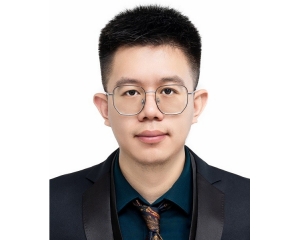
Di Wu currently holds the position of Lecturer at the School of Electronic Science and Technology, Hainan University, China. In March 2025, Di Wu earned his Ph.D. degree in Control Science and Engineering from Shanghai Jiao Tong University, Shanghai, China. From October 2023 to October 2024, he participated in a Ph.D. joint training program at the University of Naples Federico II, Naples, Italy. His research interests primarily focus on nonlinear control of aerial vehicles, multi-agent communication, and localization and mapping.
Co-organizer: Assoc. Prof. Peng Cheng, Anhui University, China
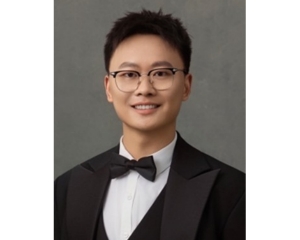 Dr. Cheng is a member of the Chinese Association of Automation (CAA) and serves on the Stochastic Systems Control Group of the Technical Committee on Control Theory (TCCT). Dr. Cheng has published 19 SCI journal papers as first author in leading journals, including Automatica and IEEE TAC. He serves as a Youth Editorial Board Member for Intelligence & Robotics and Journal of Artificial Intelligence & Control Systems. He is currently the principal investigator of a project funded by the National Natural Science Foundation of China.
Dr. Cheng has been selected for the 2025 National Postdoctoral Fellowship Program (Class B/C) and the inaugural 2024 Youth Talent Promotion Doctoral Special Program by the China Association for Science and Technology (Chinese Association of Automation). He received the Third Prize of the 2024 Anhui Provincial Science and Technology Award, the 2nd batch of China Postdoctoral Science Foundation and Anhui Province Joint Special Funding, and the 2025 Anhui Provincial Postdoctoral Research Funding (Class A). He was also awarded the 2022 China Association of Automation Outstanding Master Thesis Award.
Co-organizer: Assoc. Prof. Lei Qiao, Shanghai Jiao Tong University, China
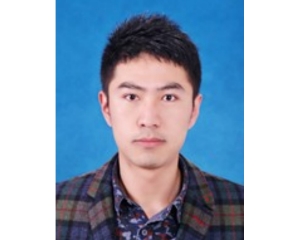 Qiao Lei is an associate professor and doctoral supervisor at Shanghai Jiao Tong University. His primary focus is the theory and application of control and swarm of underwater robotics. He has hosted more than 10 national, provincial and ministerial projects, published more than 40 papers in IEEE Transactions, IEEE JOE and other journals as the first/corresponding author, and 5 papers were selected as ESI highly cited papers. He was selected into the Young Scientist Nomination of 3rd Marine Power, Young Elite Scientists of China Association for Science and Technology, and the Stanford University List of Top 2% Scientists Worldwide. He won the Young Scientist Award of the 7th International Conference on Automation, Control and Robotics Engineering, and the Best paper and poster award of international journals and conferences seven times. He serves as the youth editorial board of Biomimetic Intelligence and Robotics, Robot and other journals.
Co-organizer: Assoc. Prof. Yu Lu, Nanjing University of Science and Technology, China
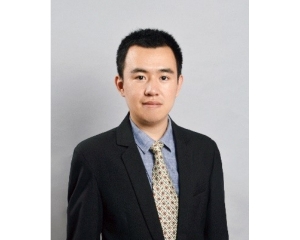 Yu Lu received his B.S. degree in automation from Nanjing University of Science and Technology (NJUST), Nanjing, China in 2015, and the Ph.D. degree in control science and engineering from Shanghai Jiao Tong University (SJTU), Shanghai, China in 2020. From 2020 to 2021, he was a research fellow with the School of Electrical and Electronic Engineering, Nanyang Technological University (NTU), Singapore. He is currently an associate professor with the School of Energy and Power Engineering, Nanjing University of Science and Technology, Nanjing, China. His research interests include motion control of unmanned aerial/surface vehicles, especially formation cooperation, robust adaptive control and fault-tolerant control.
Co-organizer: Dr. Tao Fan, University of Electronic Science and Technology of China, China
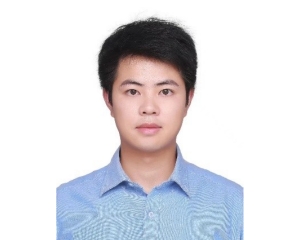 Tao Fan (Member IEEE) received the B.S. degree in communication engineering from Chongqing University, Chongqing, China, in 2019, and the Ph.D. degree in information and communication engineering with the School of Information and Communication Engineering, University of Electronic Science and Technology of China (UESTC), Chengdu, China, in 2025. Form October 2023 to October 2024, he was a visiting Ph.D. student in the Department of Electrical and Information Technology Engineering, Università degli Studi di Napoli “Federico II”, Napoli, Italy. He is currently a Post-Doctoral Fellow with UESTC. His research interests include radar clutter/interference suppression and waveform optimization.
※ Important Dates | 重要日期
|
※ Submission Guideline / 投稿指南Template Download: WORD Formatting.doc (文章模板下载) | LaTex Template Please log in the
Submission System; ( .pdf only) to submit your full paper and abstract. |