
With the rapid advancement of unmanned aerial vehicle (UAV) technology, UAV communications have become one of the core supporting technologies for 6G and beyond wireless systems, demonstrating enormous application value in diverse scenarios such as aerial surveillance, emergency rescue, smart city management, low-altitude logistics, and agricultural plant protection. However, UAV communications face critical challenges including dynamic channel environments (e.g., fast channel variations caused by high-speed movement), strict energy constraints (balancing endurance and communication energy consumption), complex interference scenarios (interference between multiple UAVs and with ground equipment), and stringent latency/reliability requirements (e.g., low-altitude secure communications). These issues still restrict the full release of their performance potential. To break through the above bottlenecks, research on transmission theory innovation, efficient resource allocation, and performance optimization for UAV communications has become an urgent need in the current wireless communication field.
This special session aims to gather cutting-edge research achievements from academia and industry, focusing on theoretical breakthroughs and engineering practice solutions for future UAV communications. We sincerely invite researchers worldwide to submit high-quality manuscripts, exploring novel transmission mechanisms, performance limit analysis, and optimization strategies in the field of UAV communications. Together, we will promote the development of efficient, reliable, and intelligent UAV communication systems, and provide technical support for the construction of 6G low-altitude communication networks.
Topics (Including but not limited to):
- Channel characteristic measurement, modeling, and simulation for UAV communications (covering high-speed movement, low-altitude complex environment scenarios)
- Information-theoretic foundations and performance bound analysis for UAV communications (e.g., capacity, latency-reliability trade-off)
- Energy efficiency optimization for UAV communications (including coordination between communication and endurance, energy-saving transmission protocol design)
- UAV-enabled integrated sensing and communication (ISAC) technologies and signal design
- UAV swarm communications and cooperative transmission (including multi-UAV networking, resource scheduling, interference suppression)
- Security and privacy protection for UAV communications (including anti-interference, identity authentication, data encryption)
- UAV communication technologies in satellite-terrestrial integrated / space-air-ground integrated networks
- Artificial intelligence (AI)-driven optimization for UAV communications (e.g., intelligent resource allocation, channel prediction)
- Integrated localization and navigation technologies for UAV communications (including high-precision positioning-aided communications)
- UAV communication solutions for special scenarios such as emergency rescue and disaster response
- Adaptive UAV communication technologies in complex environments such as marine areas, plateaus, and urban canyons
- Hardware implementation and prototype system development for UAV communications (including lightweight terminal design)
Organizer: Prof. Hao Jiang, Southeast University, China
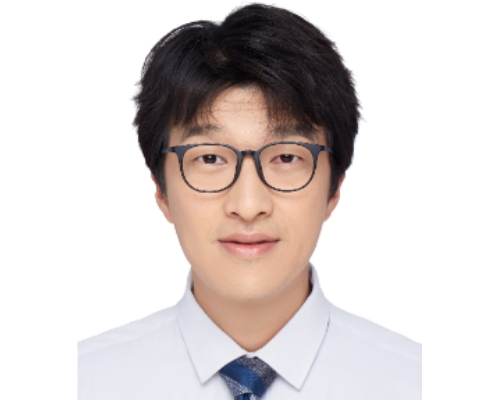
Hao Jiang received the B.S. and M.S. degrees in electrical and information engineering from Nanjing University of Information Science and Technology, Nanjing, China, in 2012 and 2015, respectively, and the Ph.D. degree from Southeast University, Nanjing, in 2019. From 2017 to 2018, he was a Visiting Student with the Columbia University in the City of New York, USA. From 2019 to 2026, he was with the School of Artificial Intelligence, Nanjing University of Information Science and Technology. Since 2026, he has been with the School of Cyber Science and Engineering, Southeast University, where he is currently an associate Professor and a Supervisor of Ph.D. and graduate students. His research interests include wireless communications and networking, electromagnetic signal processing and optimization techniques, and Internet-of-Things (IoT).
Co-organizer: Prof. Qiuming Zhu, Nanjing University of Aeronautics and Astronautics, China
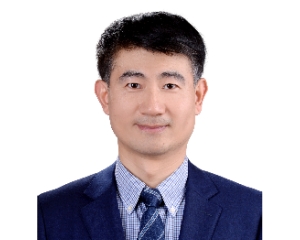 Qiuming Zhu (Senior Member, IEEE) received the B.S. degree in electronic engineering and the M.S. and Ph.D. degrees in communication and information system from Nanjing University of Aeronautics and Astronautics (NUAA), Nanjing, China, in 2002, 2005, and 2012, respectively. Since 2021, he has been a Professor with the Department of Electronic Information Engineering, NUAA. He was also an academic visitor at Heriot-Watt University, Edinburgh, U.K., and Polytechnic University of Madrid, Madrid, Spain. He has authored or co-authored over 200 articles in refereed journals and conference proceedings. He holds over 80 Chinese and international patents. His current research interests include channel sounding, modeling, and emulation for low-altitude networks and 3-D spectrum mapping and environment awareness.
Co-organizer: Prof. Shuran Sheng, Shanghai Dianji University, China
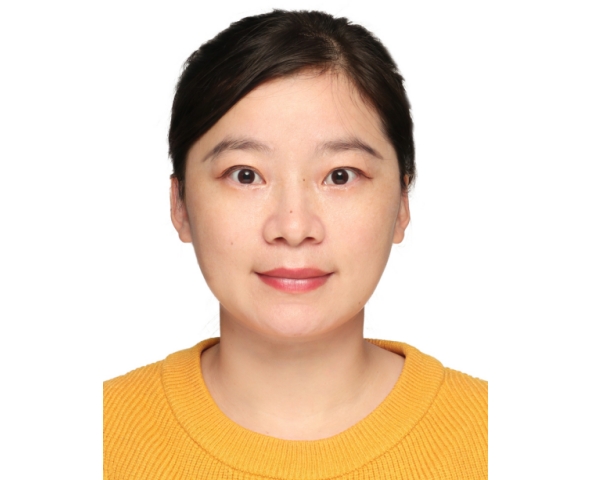 Shuran Sheng received the B.Eng. degree from Anhui University, Hefei, China, in 2010, the M.S. degree from Nanjing University of Science and Technology, Nanjing, China, in 2013, and the Ph.D. degree from Southeast University, Nanjing, China, in 2021, respectively. From 2017 to 2019, she was a Visiting Student with the Department of Electrical and Computer Engineering, Western University, London, ON, Canada. Since 2021, she has been a Lecturer with the School of Aerospace Information Science and Technology, Shanghai Dianji University, Shanghai, China. She was a Visiting Scholar with the Department of Mechanical Engineering, Kanagawa University, Yokohama, Japan. Her research interests include spectrum sensing, resource allocation, vision language navigation, and intelligent robotics.
※ Important Dates | 重要日期
|
※ Submission Guideline / 投稿指南Template Download: WORD Formatting.doc (文章模板下载) | LaTex Template Please log in the
Submission System; ( .pdf only) to submit your full paper and abstract. |